
If you’re upgrading your water system in Falkirk, there’s a good chance you’ve come across the term “unvented hot water cylinder”. It’s something we get asked about regularly when we’re out looking at older systems or helping homeowners plan extensions and new bathrooms.
Plenty of people know they want better pressure at the shower or more reliable hot water, but they’re not always sure what system will actually deliver it. In this guide, I’ll walk you through what unvented systems are, the real unvented hot water cylinders benefits, and what you should consider before having one installed.
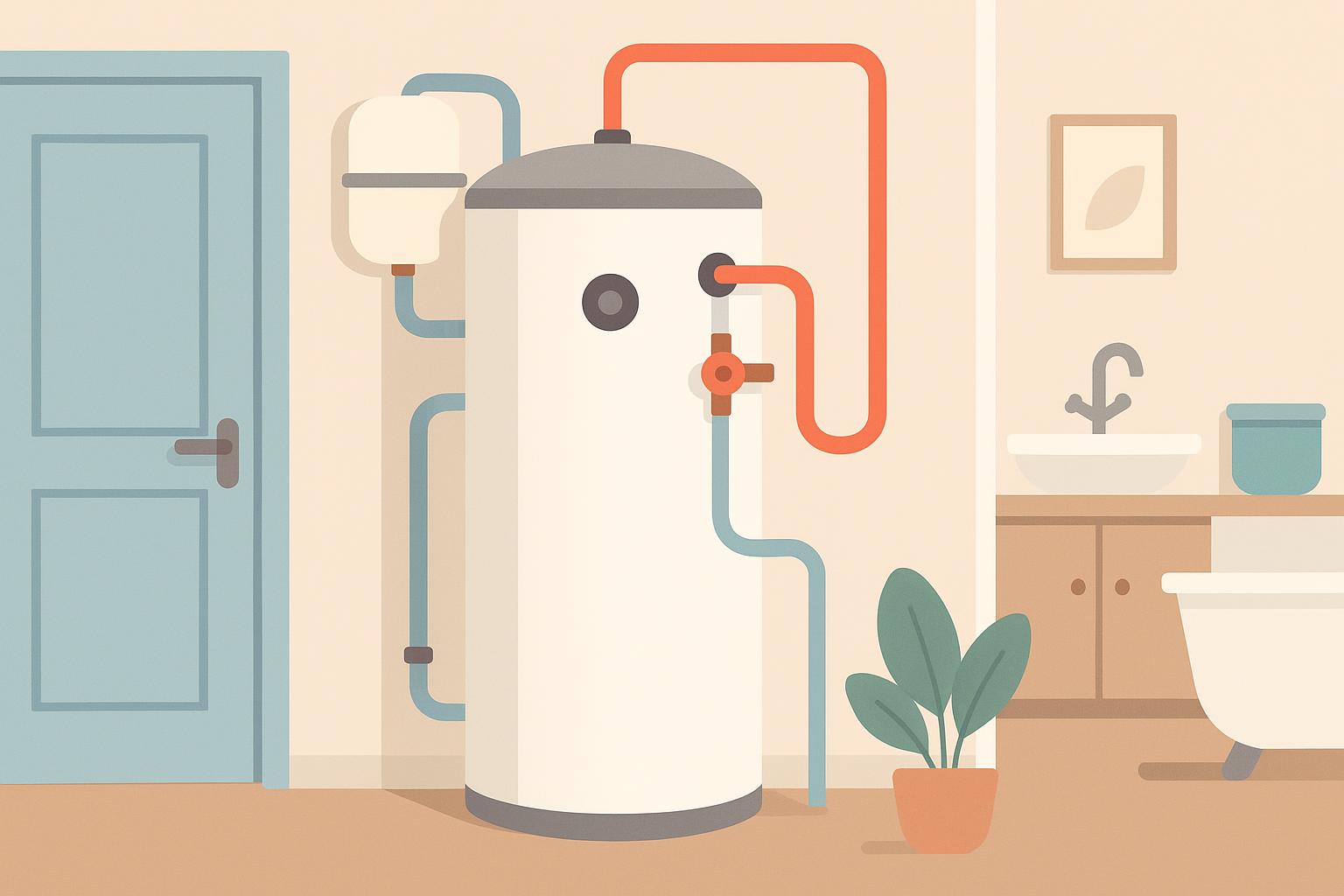
What Is an Unvented Hot Water Cylinder?
An unvented hot water cylinder is a sealed hot water storage system that’s fed directly from the mains water supply. Unlike older vented systems, it doesn’t rely on a cold water storage tank in the loft to create pressure.
With a traditional vented system, the height of the loft tank determines your water pressure. That is why showers in older properties can feel a bit underwhelming, especially if someone turns a tap on downstairs. An unvented system uses mains pressure instead, which usually means much stronger and more consistent flow.
These cylinders are pressurised and come with built-in safety devices such as pressure relief valves and expansion vessels. Because of that, installation and servicing must be carried out by a qualified engineer with the correct unvented certification.
The Benefits of Unvented Hot Water Cylinders
Strong, Reliable Water Pressure
The main reason people in Falkirk look at unvented systems is pressure. If you’ve ever tried to run two showers at once in an older house, you’ll know how frustrating it can be.
As long as your incoming mains supply is decent, an unvented cylinder can provide high pressure hot water to multiple outlets at the same time. That means showers, baths and kitchen taps can all run without a noticeable drop.
No Cold Water Tank in the Loft
One of the practical unvented hot water cylinders benefits is that you don’t need a cold water storage tank in the loft. That frees up space and removes the risk of tank-related leaks or freezing pipework during a cold snap.
We still see older loft tanks in properties around the area that haven’t been touched in years. Removing them can make the system simpler and often more hygienic too, as you’re no longer storing large volumes of cold water overhead.
Better Use of Space
Unvented cylinders are usually installed in an airing cupboard, utility room or garage. Because there’s no loft tank, system layouts can be more flexible. This is particularly useful in estates where loft access is awkward or heavily insulated.
Great for Modern Homes and Extensions
If you’re adding a second bathroom or upgrading to larger showers, an unvented system can cope far better with demand. We often speak to homeowners who are converting garages or building extensions and quickly realise their old system won’t keep up.
When sized correctly, an unvented cylinder stores enough hot water to meet typical family needs without running out halfway through bath time.
Installation Considerations
Mains Water Pressure
Before recommending an unvented system, we always test the incoming mains pressure and flow rate. If the supply is poor, the system won’t perform as expected. In some parts of town, pressure can vary street by street.
If the supply is marginal, we’ll explain your options clearly. There’s no point installing a pressurised cylinder if the incoming water can’t support it.
Correct Sizing
Cylinders come in different capacities. Choosing the right size depends on:
- Number of bathrooms
- Number of occupants
- Type of showers and baths
- Typical daily usage
It’s a balance. Too small and you risk running out of hot water. Too large and you’re heating more water than you really need.
Qualified Installation
Because unvented systems are pressurised, they must be installed and commissioned by a qualified engineer. Safety components have to be fitted correctly and discharge pipework must comply with regulations.
It’s not a DIY job and it’s not something to cut corners on. When installed properly and serviced annually, these systems are very reliable.
Servicing and Maintenance
An annual service checks expansion vessels, pressure relief valves and overall operation. It’s straightforward work but essential for keeping the system safe and maintaining manufacturer warranties.
Conclusion
For many homeowners upgrading their water systems, the unvented hot water cylinders benefits are clear: strong pressure, no loft tank and better performance for modern living. They’re not right for every property, but when matched to the right home they make a noticeable difference day to day.
If you’re based in Falkirk, Stirling, Livingston, Bo’ness, Linlithgow or Cumbernauld and considering a hot water upgrade, it’s worth speaking to a local engineer who understands the variations in housing stock and mains supply across the area. Morland & Martin Ltd regularly assess and install these systems, taking the time to explain what will genuinely suit your property. If you’re unsure whether an unvented system is the right move, Morland & Martin Ltd can talk you through the options clearly and honestly.