
Noticing a puddle under your boiler is never a good feeling. Most people spot it when they pop into the cupboard for the hoover or see a damp patch on the kitchen floor. Either way, it is not something to ignore. A small drip can quickly turn into water damage, electrical faults or a full breakdown.
Over the years I have attended hundreds of boiler repairs where the first sign of trouble was a leak that had been left for weeks. Sometimes it is a simple fix. Other times the water has caused far more damage than the original fault. So let’s look at why boilers leak, what you can safely check yourself and when it is time to call in a professional.
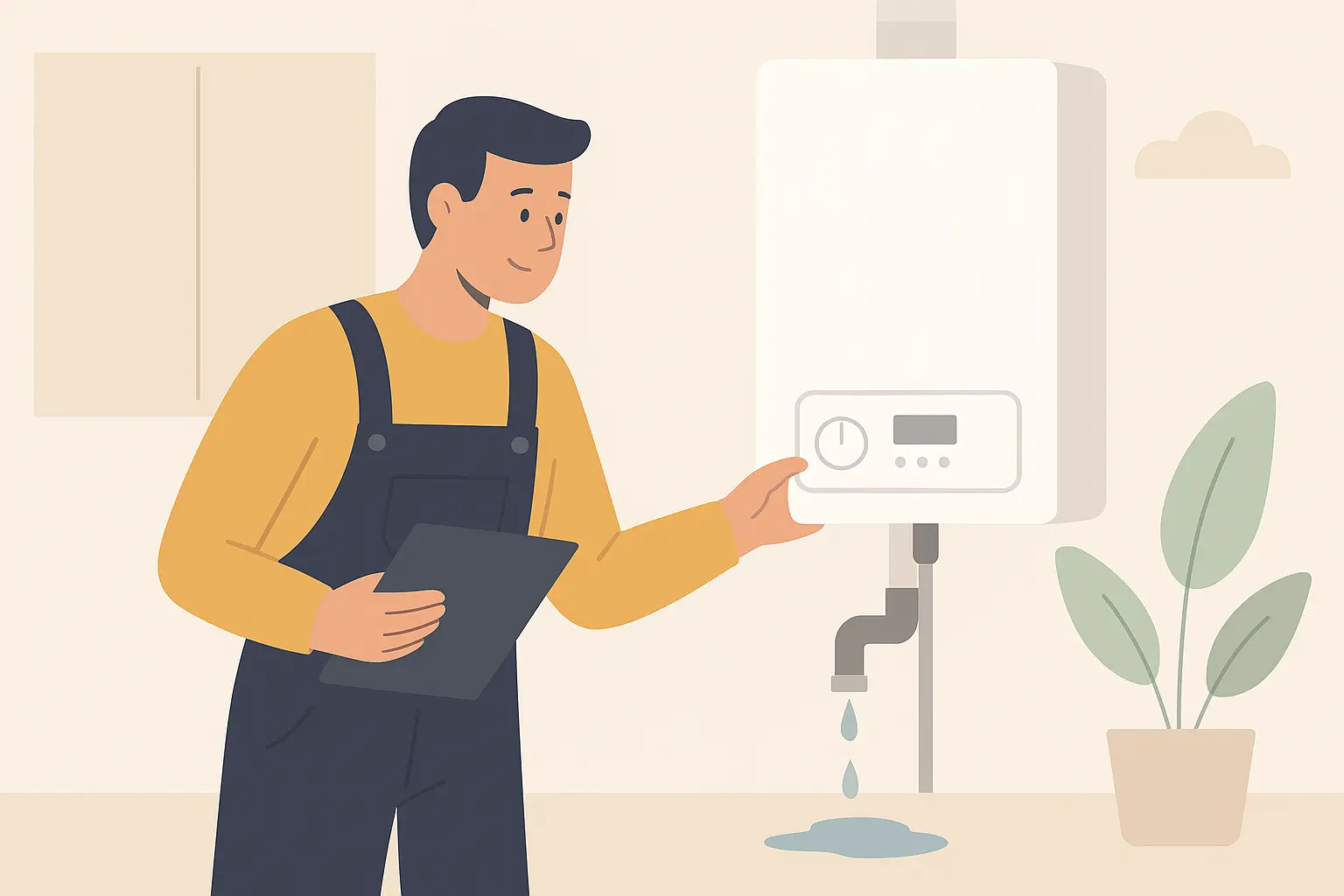
Common causes of a leaking boiler
1. High boiler pressure
One of the most common reasons for a leak is excessive pressure inside the system. Your boiler should usually sit around 1 to 1.5 bar when it is cold. If the gauge is creeping up towards 3 bar, that is too high.
When pressure builds up, the safety pressure relief valve can open to let water out. You might see water dripping outside through a copper pipe or inside beneath the boiler.
High pressure can be caused by:
- Overfilling the system when topping up
- A faulty filling loop letting water in
- A failed expansion vessel
If you have recently topped up the pressure and it has gone too high, you might be able to carefully bleed a radiator to bring it down. If the pressure keeps rising on its own, that needs checking by an engineer.
2. Corrosion inside the boiler
Boilers contain metal parts, seals and joints. Over time, especially in older systems without sludge protection, corrosion can take hold. This can eat away at pipes, heat exchangers and fittings.
I often see this in older properties around Cumbernauld where the boiler has done a good 12 to 15 years. A pinhole in a corroded pipe or heat exchanger can cause a steady drip that only gets worse.
If corrosion is inside the heat exchanger itself, that can be an expensive repair and sometimes tips the balance towards replacement.
3. Faulty seals and joints
Boilers heat up and cool down constantly. That expansion and contraction puts stress on rubber seals and compression joints. Over time they can harden, split or loosen slightly.
This is one of the more straightforward causes. You might notice water around a joint or a small drip from a visible connection. In many cases, replacing a seal or tightening a fitting solves the problem quickly.
4. Cracked heat exchanger
This is less common but more serious. The heat exchanger is the main component that transfers heat to your water. If it cracks, water can leak directly from inside the boiler casing.
Signs can include:
- Water pooling beneath the centre of the boiler
- Pressure that will not stay stable
- Strange kettling or banging noises
In this situation, the repair cost can be significant. If the boiler is older, replacement may make more sense.
5. Pump or internal component failure
Modern boilers have internal pumps and valves that circulate water. If a pump seal fails or a component cracks, leaks can start internally and work their way out.
This is not something to investigate yourself. Once water is near electrics, it is time to turn the boiler off and get it checked.
How to identify where the leak is coming from
Before you call anyone, there are a few safe checks you can do.
- Dry the area under the boiler and monitor where fresh water appears
- Check the pressure gauge and note the reading
- Look at the pressure relief pipe outside for dripping
- Check visible pipe joints for moisture
If the leak is coming from inside the boiler casing, do not remove the cover. Only Gas Safe registered engineers should do that.
I have had landlords in Linlithgow and homeowners in Bo’ness try to keep topping up the pressure every few days without fixing the cause. That usually makes things worse. If you are needing frequent top ups, there is a fault somewhere.
If you are based locally, support is available in Cumbernauld, Borrowstounness and Linlithgow with engineers who know the common system layouts in these properties.
When to repair vs replace your boiler
This is something customers ask me all the time. The answer depends on three main things: age, condition and cost of repair.
If your boiler is under 8 years old and generally reliable, most leaks are worth repairing. Seals, valves and even pumps can often be replaced without huge expense.
If the boiler is over 12 to 15 years old and the heat exchanger has failed or corrosion is widespread, replacement may be more sensible. You do not want to fix one leak only for another to show up six months later.
A good engineer will talk you through both options honestly rather than pushing one route.
Preventative maintenance tips to avoid future leaks
While not every leak can be prevented, regular care makes a big difference.
- Book an annual service to check seals, pressure and components
- Keep an eye on the pressure gauge every few weeks
- Install a magnetic filter to reduce sludge and corrosion
- Avoid repeatedly overfilling the system
I often see systems that have never been serviced properly. A simple annual check would have picked up small issues long before water started dripping through a ceiling.
When to call in a qualified engineer
If your boiler is leaking and you are unsure of the cause, the safest approach is to switch it off and seek professional advice. Water and electrics are not a combination to take lightly.
A small leak might be a simple fix. It might also be a warning sign of a bigger internal fault. Getting it checked early usually keeps costs and stress down.
If you are dealing with a leaking boiler and want clear, practical advice from experienced local engineers, the team at Morland and Martin can help. Need expert help with a leaking boiler? Contact our team today and we will guide you through the next steps.